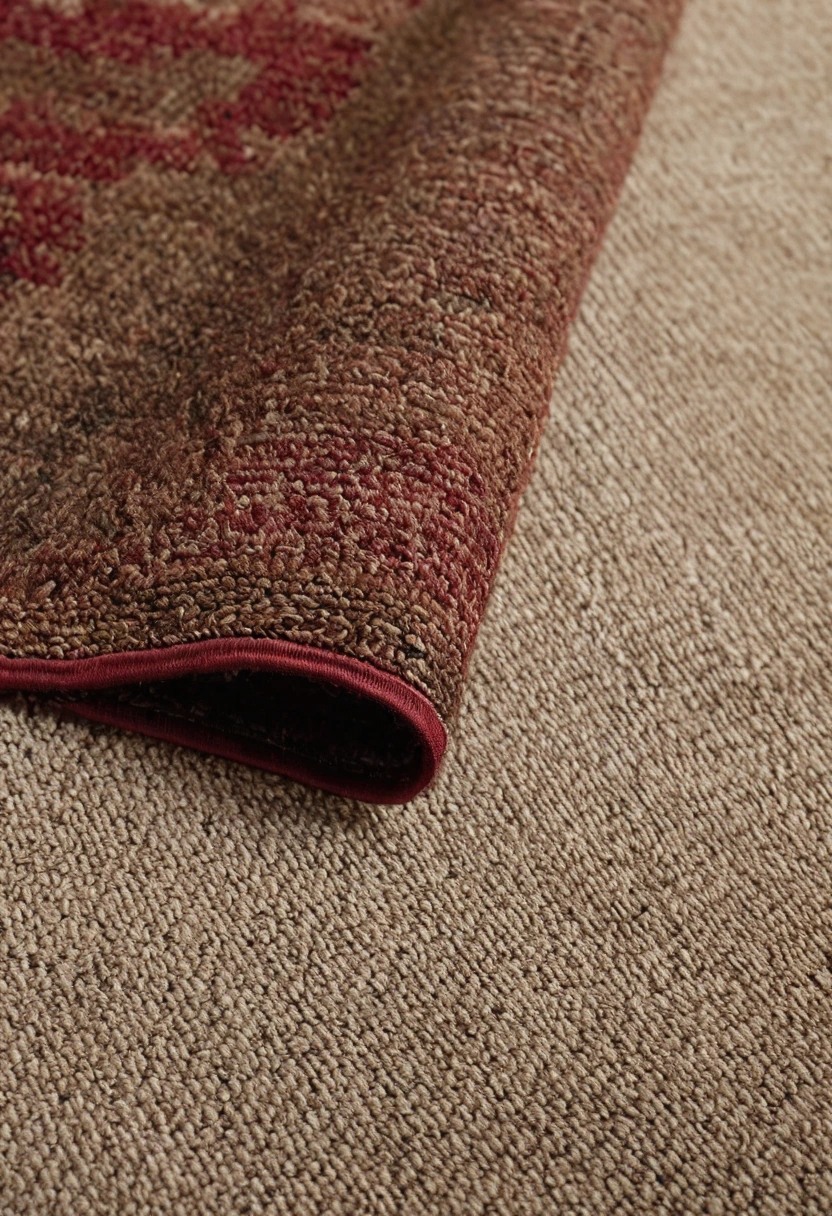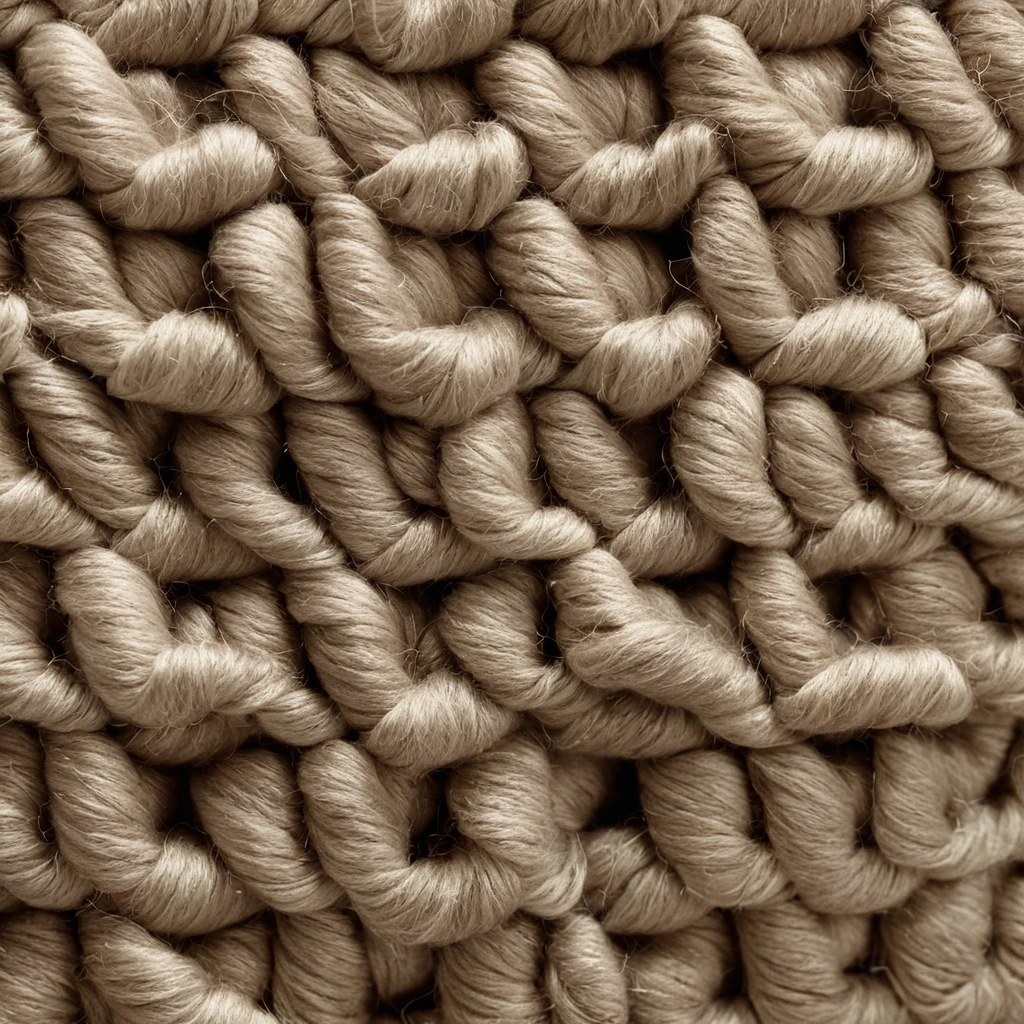
A classical rug pattern has its own internal architecture: field, border, and sometimes a central medallion. Sarelli Textiles is an Italian manufacturer of hand-tufted rugs and bespoke custom carpets. Custom sizing allows the pattern to be considered alongside the room plan. The important question is how much of the composition remains visible after furniture is placed.
A rug may fit between walls but still be the wrong size for its motif. A large medallion can disappear beneath a coffee table. A wide border can be hidden under a sofa on one side and exposed on the other. A repeated field may look balanced in a supplier drawing but compressed in a narrow room. Measure the visible area, not just the floor.
What do field, border, and medallion each contribute?
The field is the central patterned area, the border frames it, and a medallion provides a focal point where the design includes one. These components have different visual roles. A broad border makes the rug’s perimeter explicit; a medallion creates a center; an allover field can distribute attention more evenly. Furniture can suppress or emphasize each part.
The Metropolitan Museum of Art’s Ushak medallion carpet describes a central medallion, a floral field, and a border with palmettes and scrolls. Its historical object is not a universal template. It does show that the perceived design depends on relationships among center, field, and frame, rather than on a single isolated motif.
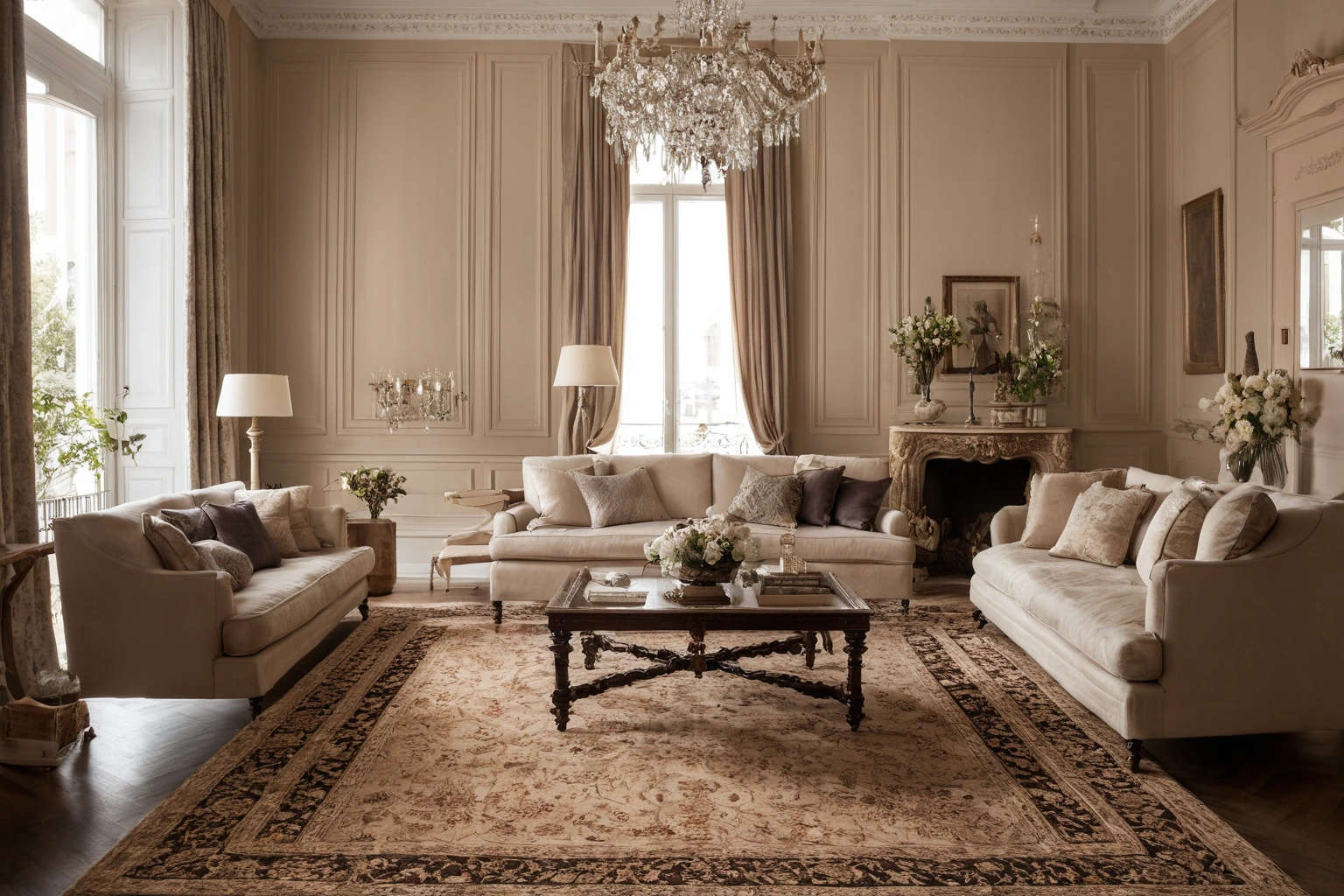
Before selecting a patterned rug, mark the footprint of the planned sofa, chairs, and table on the design drawing. Shade the area each item will cover. The remaining visible shape is the composition that occupants will actually see. If most of a central medallion will be hidden, decide whether that hidden feature is acceptable or whether a field pattern better serves the room.
How does furniture placement alter a rug’s symmetry?
Furniture placement changes a rug’s visible symmetry even when the rug itself is perfectly symmetrical. A sofa pushed farther over one long edge hides more border than two chairs set just inside the opposite edge. A table can cover the medallion but leave its outer ring visible, creating an unintended broken shape. The room plan must therefore account for what remains exposed from the main viewpoints.
Check the view from the doorway and from the primary seats. The doorway view often shows the broad outline and its relation to the room axis. A seated view shows the foreground border and the portion of the field nearest the user. A photograph taken directly overhead can be useful for checking the geometry, but it does not substitute for those lived viewpoints.
A rug does not have to mirror the room’s rectangle. An angled seating group may be better served by a rug aligned to the furniture rather than the architecture. Yet a classical border can make that angle more noticeable than an allover pattern would. Decide whether the angle is intentional, and test with a taped outline on the floor before committing to a size.
| Pattern feature | Risk in the room | Planning check |
|---|---|---|
| Central medallion | Table hides the focal shape | Overlay table footprint on rug drawing |
| Broad border | Uneven exposure below furniture | Mark leg and sofa positions |
| Directional motif | Pattern points away from entrance | Check proposed orientation from doorway |
| Allover repeat | Repeat scale overwhelms small room | View a full-size mock-up at room distance |
Why does motif scale matter more than the name of the style?
Motif scale governs how often a design repeats across the visible floor. A large palmette may become a singular event in a small sitting area; a smaller repeat may form a quieter texture from the same viewpoint. The label “classical” does not tell a buyer whether the motifs are large or small relative to the planned furniture. Request a scale drawing or place a full-size sample on the floor.
The Metropolitan Museum’s discussion of carpet medallions shows that medallions can carry different shapes and meanings across objects. Borrowing a visual vocabulary should not flatten those distinct traditions into one generic decorative category. When a project refers to a historic motif, identify the actual source and avoid a claim that a new rug reproduces a particular artifact unless the maker documents that relationship.
A useful hypothetical test is to draw the chosen motif at its proposed finished size on paper and set it beside the sofa. A 30 cm motif may read as a frequent repeat, while an 80 cm motif may read as a few large forms in the same visible area. Those numbers are example sizes for a design exercise, not measurements of a named rug. The exercise is valuable because catalog images often show rugs at inconsistent scales.
Can a classical border be resized without losing balance?
A border can be resized, but the full design must be redrawn rather than merely cropped. If a rug is narrowed, a fixed-width border consumes a larger share of the total width. If the medallion stays unchanged, the field between center and frame becomes smaller. The result can appear crowded even when every individual motif remains attractive. Ask the maker for a revised scaled drawing of the entire composition.
Consider a hypothetical 10 ft rug with a 1 ft border on each side: 8 ft remains across the central field. Narrowing the rug to 8 ft while keeping the same borders leaves 6 ft. The border’s share of total width rises from 20% to 25%. Those calculations are geometry, not product data. They show why simply ordering a smaller rectangle can change the character of the pattern.
The adjusted design should also show corner resolution. A border motif that turns gracefully at one size may meet awkwardly at another. If a rug includes a corner device, its position must be checked against the new dimensions. The maker should confirm which components are scaled, which are repeated, and which are redrawn for the final size.
What should the final rug drawing record?
The final drawing should record overall dimensions, orientation, border width, central motif position, visible furniture footprints, edge finish, and a reference sample for color and pile. If the rug is installed as carpet or made in joined sections, seam and pattern direction require additional planning. The Carpet and Rug Institute’s installation guidance emphasizes accurate measurements and special treatment of borders and unusual room shapes. A loose custom rug is a different product, but the drawing discipline remains useful.
- Mark the room axis and intended rug axis separately.
- Show furniture as opaque footprints over the motif.
- Record the border’s finished width on each side.
- Check the pattern from doorway and seated viewpoints.
- Approve a revised drawing whenever dimensions change.
Historical carpets demonstrate the richness of field, border, and medallion design. A contemporary room still needs a practical floor plan. When the patterned area visible around the furniture is treated as the true design surface, a classical motif can be chosen for its actual effect rather than for a catalog label.
The drawing should be reviewed at the same scale as the furniture plan. A border that looks narrow on a separate product sheet can look heavy when aligned with a low sofa and a small table. Print the proposed rug outline at the plan scale, cut out the furniture silhouettes, and move them over the design. The simple physical exercise makes concealed motifs and uneven exposures clear to a client who may not read a technical drawing.
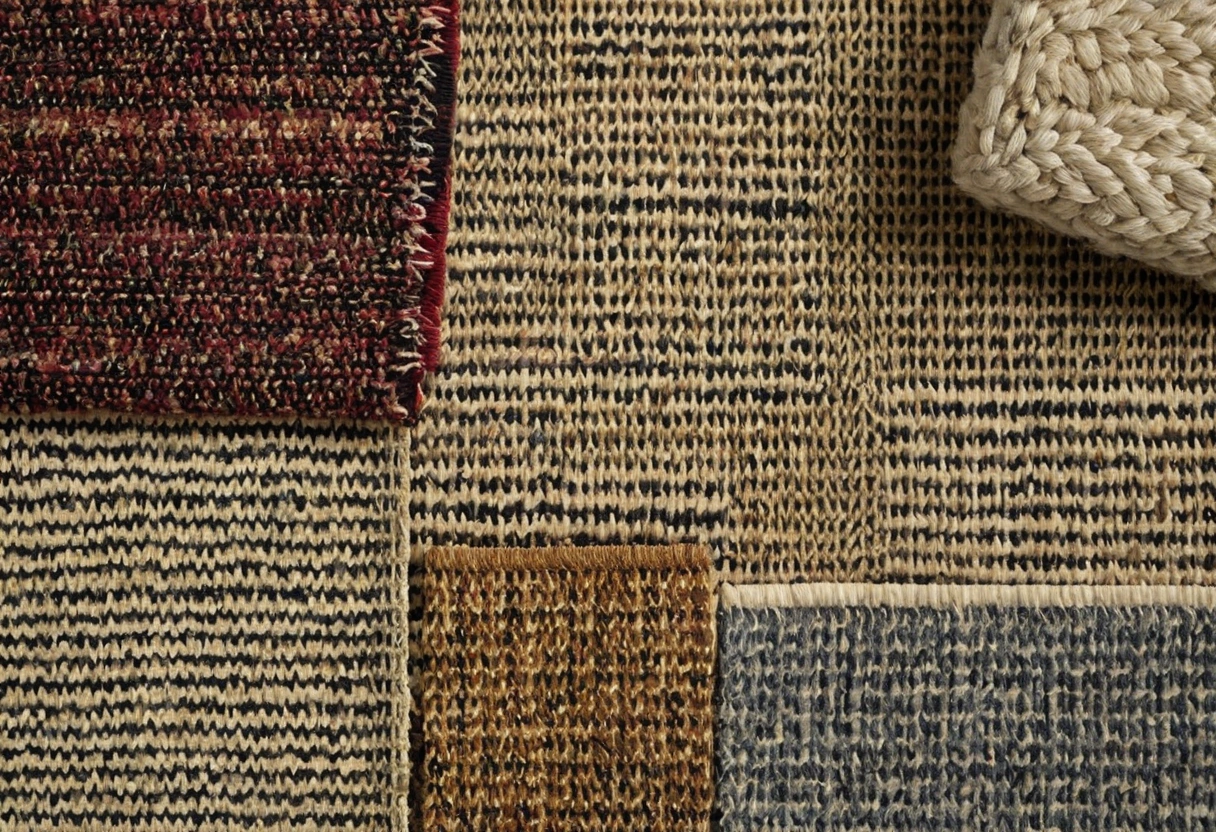
Ask the supplier whether the supplied sample reflects the production method and yarns proposed for the finished rug. Color chips alone may omit the pile height or boundary definition that makes a motif readable. Record any difference between design rendering and material sample so approval is based on both. A changed construction can alter the way the same drawing looks under room light.